Jasna Góra Monastery
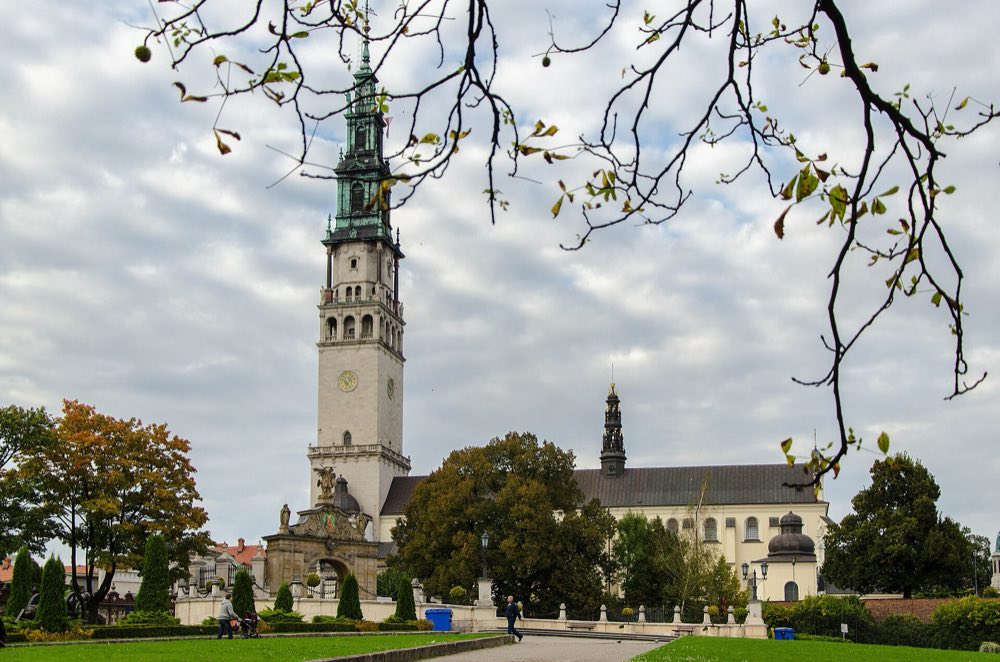
The Pauline Fathers came to the “Bright Hill,” Jasna Góra, in 1382, bringing with them an icon of the Virgin and Child that tradition says was painted by Saint Luke on a tabletop from the house of the Holy Family. In 1430 robbers slashed the face of the Virgin with a sword, and the two scars on her cheek are visible still. The darkened image is loved as the Black Madonna of Częstochowa.
In 1655 the fortified monastery held out against a Swedish army that had overrun almost all of Poland. The next year King John II Casimir proclaimed the Virgin Mary Queen of Poland. Through partitions, wars and Communism, Jasna Góra remained the heart of Polish faith and freedom.
The icon hangs in the Chapel of Our Lady, beside the Baroque basilica. About four million pilgrims come each year. Every August tens of thousands walk there on foot from all over Poland, some from Warsaw on a pilgrimage made every year since 1711. Pope Saint John Paul II came here many times, as a young priest, as archbishop of Kraków and as pope.
- Built
- Founded 1382; basilica rebuilt 1690s
- Style
- Gothic and Baroque
- Where
- Częstochowa, Poland
- Map
- Find it on OpenStreetMap