Seville Cathedral
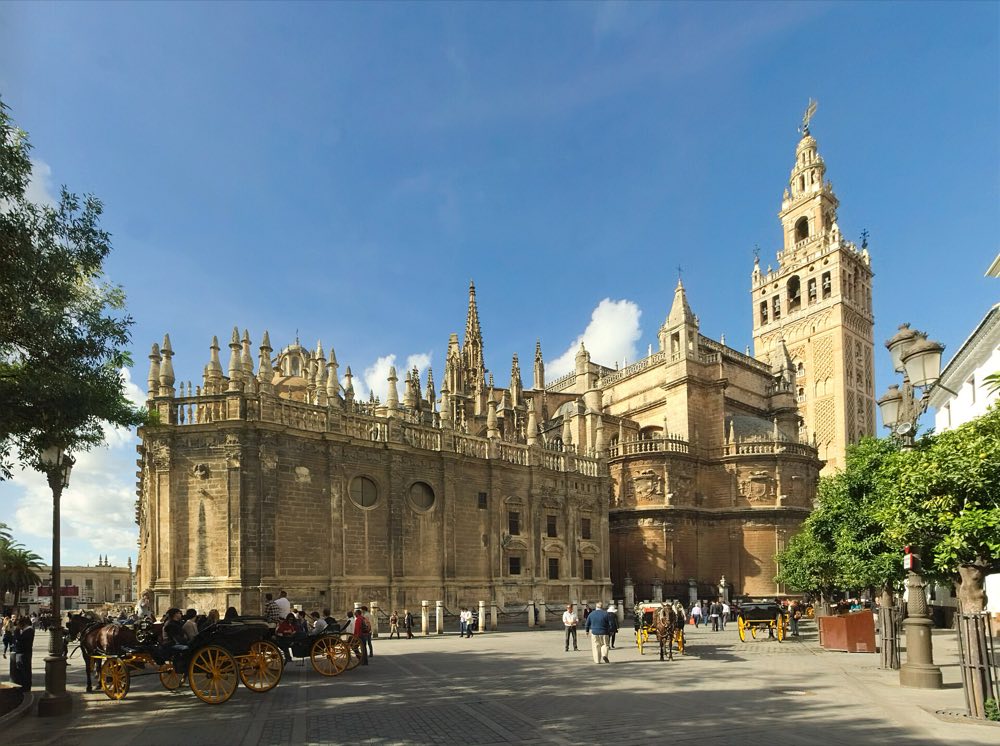
When Seville was reconquered in 1248, its great mosque was consecrated as a cathedral. In 1401 the chapter decided to replace it. They are said to have resolved to build “a church so large that those who see it will think us mad.” The result, finished in 1506, is the largest Gothic cathedral in the world.
Its bell tower, the Giralda, was once the minaret of the mosque. The Christians crowned it in the sixteenth century with a Renaissance belfry and a bronze weathervane figure of Faith, the Giraldillo. Visitors climb to the top by a series of ramps instead of stairs, built so that the muezzin could ride up on horseback. The Court of the Orange Trees also survives from the mosque.
Inside, the great altarpiece of the main chapel is the largest in the world, a wall of gilded wood carved with scenes from the life of Christ. Four statues of kings carry the tomb of Christopher Columbus. The cathedral, with the nearby Alcázar and Archive of the Indies, is a UNESCO World Heritage Site.
- Built
- 1401–1506
- Style
- Gothic, with Renaissance and Baroque additions
- Where
- Seville, Spain
- Map
- Find it on OpenStreetMap