St. Patrick’s Cathedral
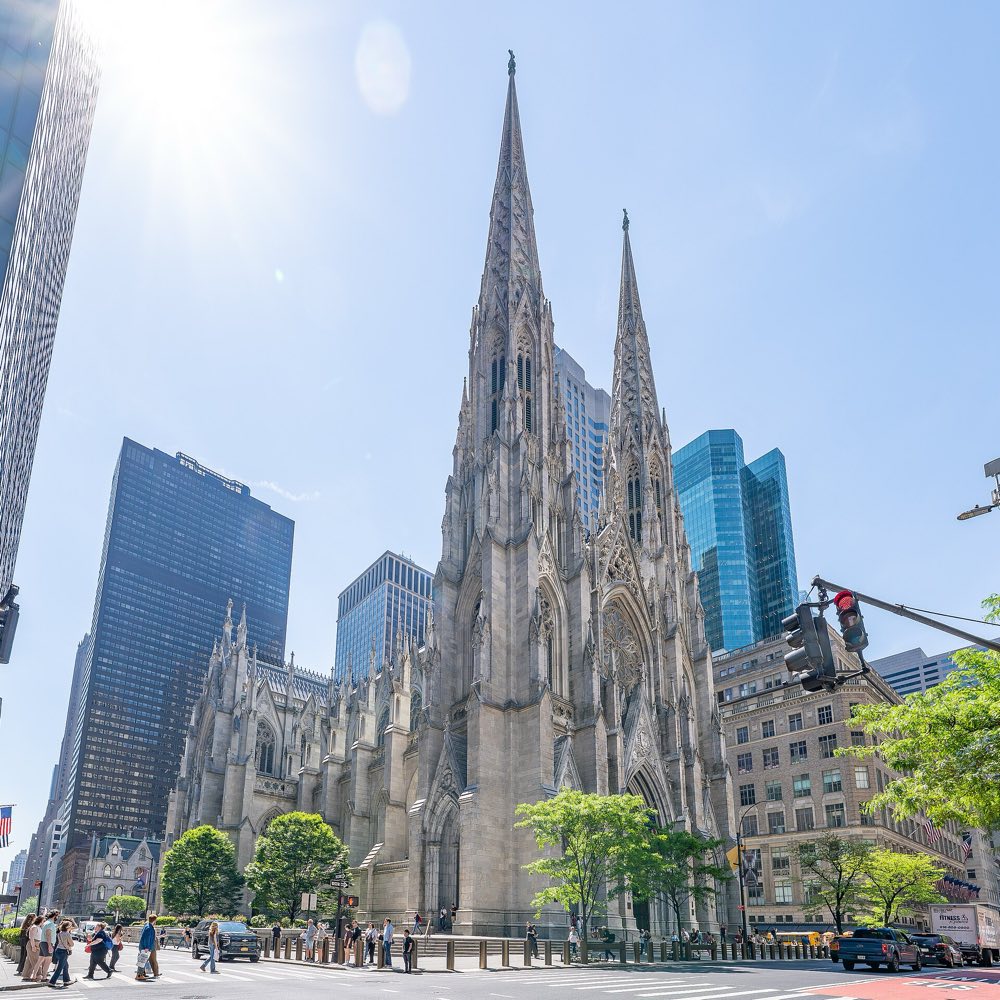
When Archbishop John Hughes laid its cornerstone in 1858, many New Yorkers mocked “Hughes’s folly,” a huge cathedral far uptown in open country. Built by poor Irish immigrants and their pennies, it was designed by James Renwick Jr. in the style of the great Gothic cathedrals of Europe. The work stopped during the Civil War. The cathedral was dedicated in 1879, and its twin spires, 100 metres high, were added in 1888. Today it stands in the heart of Midtown, opposite Rockefeller Center.
It is the seat of the Archbishop of New York and the most visited Catholic church in the United States, with some five million visitors a year. Its Lady Chapel, great rose window and bronze doors are much admired, and the crypt beneath the altar holds the tombs of the archbishops of New York. Among them is Venerable Fulton Sheen, whose remains were later moved to Illinois. Pierre Toussaint, a Haitian-born former slave and philanthropist whose cause for canonization is open, also lies there.
A major restoration, completed in 2015, cleaned the marble inside and out. Pope Francis celebrated Vespers here that September.
- Built
- 1858–1878 (spires 1888)
- Style
- Gothic Revival
- Where
- New York, United States
- Map
- Find it on OpenStreetMap