Saint Agnes
- Lived
- c. 291 – c. 304
- Patron of
- girls, the betrothed and chastity
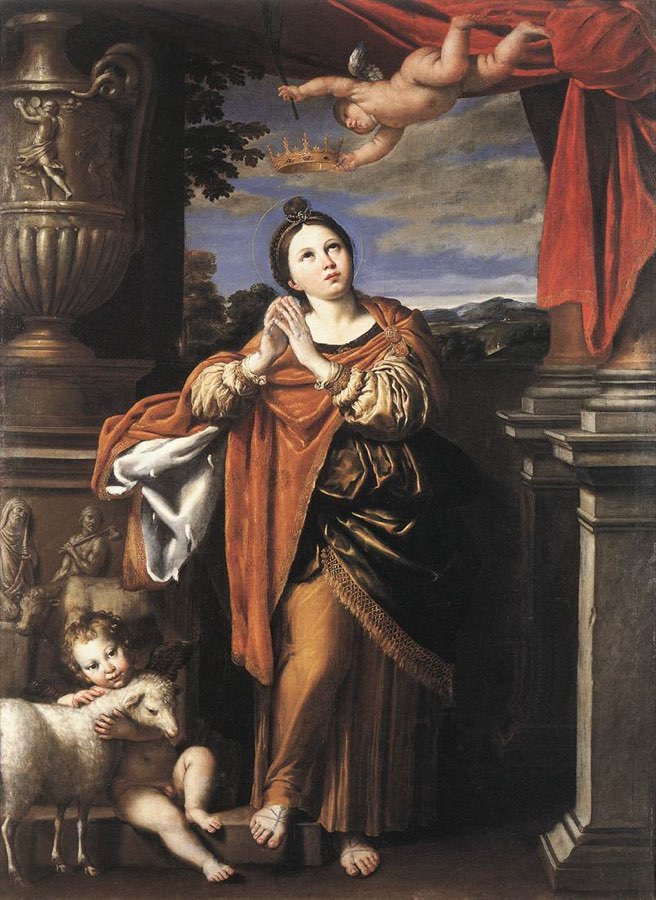
Agnes is one of the most celebrated martyrs of Rome. Her name is recited in the Roman Canon of the Mass. Saint Ambrose, Saint Jerome and the poet Prudentius all wrote of her within a century of her death.
She was a girl of about twelve or thirteen, of a noble family, who had consecrated her virginity to Christ. The accounts differ in their details, but they agree that she was sought in marriage and refused, saying that she already had a Spouse. She was denounced as a Christian, probably in the persecution of Diocletian around 304. Threats did not move her, nor did the fire and chains that were shown to her. Saint Ambrose marvelled that a child hardly old enough to be wounded could have been strong enough to conquer: “She went to the place of execution more cheerfully than others go to their wedding.” She was put to death by the sword.
She was buried in a cemetery on the Via Nomentana outside Rome. There, in the fourth century, Constantine’s daughter built a basilica over her tomb, and the church of Sant’Agnese fuori le Mura still stands on the site.
Her name resembles the Latin agnus, lamb, and so she is shown with a lamb. On her feast day two lambs are blessed at her basilica. Their wool is woven into the pallia, the white woollen bands the pope gives to new archbishops as a sign of their office and of their union with him.