Saint Gregory the Great
- Lived
- c. 540–604
- Patron of
- musicians, singers and teachers
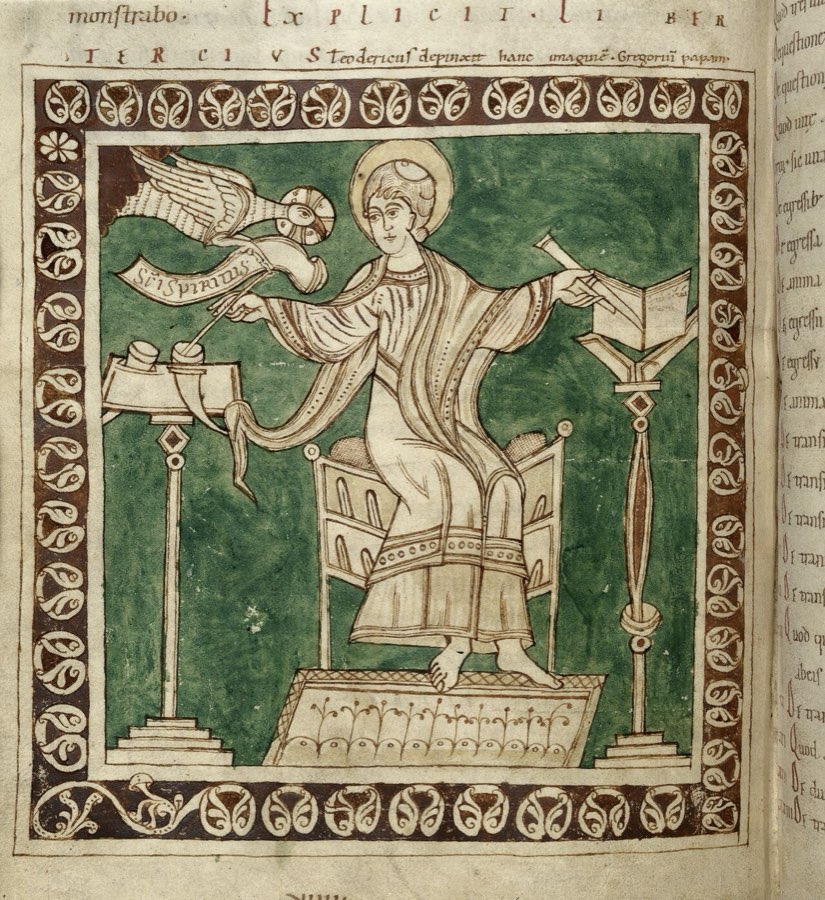
Gregory was born around 540 into a wealthy Roman family that had already given the Church two popes. Rome was then a battered, shrinking city, fought over in the wars between the Byzantines and the Goths. He entered public life, and by about 573 he was prefect of the city, its highest civil office.
Soon afterwards he gave it all up. He turned his family home on the Caelian Hill into a monastery dedicated to Saint Andrew, founded six more on his estates in Sicily, and became a monk. He always looked back on those years as the happiest of his life. The pope made him a deacon and sent him as his envoy to the imperial court at Constantinople, and later called him home to be his adviser.
In 590 plague struck Rome and killed the pope, and the clergy and people chose Gregory to succeed him. He tried to avoid it, but was consecrated on 3 September 590, the day the Church now keeps his feast. Though often ill, he governed the Church with energy for fourteen years. He organized food for the starving city, negotiated with the Lombards who threatened it, reformed the clergy and defended the poor. In 596 he sent the monk Augustine with forty companions to preach to the English, and he followed their mission with letters full of practical wisdom.
He was the first pope to call himself “servant of the servants of God.” His Pastoral Rule taught bishops for centuries, and his Dialogues preserve the life of Saint Benedict. The Church’s plainchant bears his name. He died on 12 March 604, and he is one of the four great Latin Doctors of the Church.