Saint Jude
- Lived
- 1st century
- Patron of
- desperate cases and lost causes
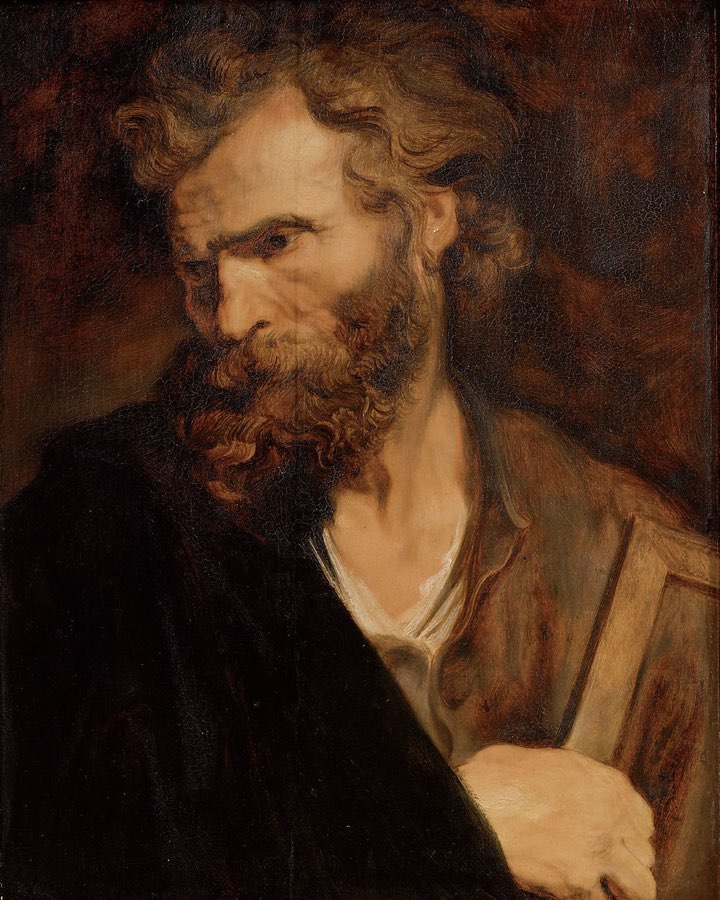
Jude, also called Thaddeus, was one of the Twelve. Luke calls him “Jude the brother of James” (Luke 6). John is careful to call him “Judas, not the Iscariot,” so that he is not confused with the betrayer. At the Last Supper he asked a question: “Lord, how is it, that thou wilt manifest thyself to us, and not to the world?” Jesus answered, “If any one love me, he will keep my word, and my Father will love him, and we will come to him, and will make our abode with him” (John 14).
The short Letter of Jude near the end of the New Testament is attributed to him. In it he urges Christians “to contend earnestly for the faith once delivered to the saints,” and he ends with one of the most beautiful doxologies in Scripture (Jude 1).
Tradition says that after Pentecost Jude preached in Mesopotamia and Persia together with the Apostle Simon the Zealot, and that the two were martyred there. For this reason the Church keeps their feast together, on 28 October. Their relics are venerated in Saint Peter’s Basilica in Rome.
Because his name so closely resembled that of Judas Iscariot, few people prayed to him for centuries. Perhaps for that reason he came to be called on when every other hope had failed, and he became the patron of desperate cases and lost causes. Devotion to him spread widely in the twentieth century, and many shrines and hospitals bear his name.