Saint Peter
- Also kept
- the Chair of Saint Peter (22 February)
- Lived
- died c. 64–67
- Patron of
- popes and fishermen
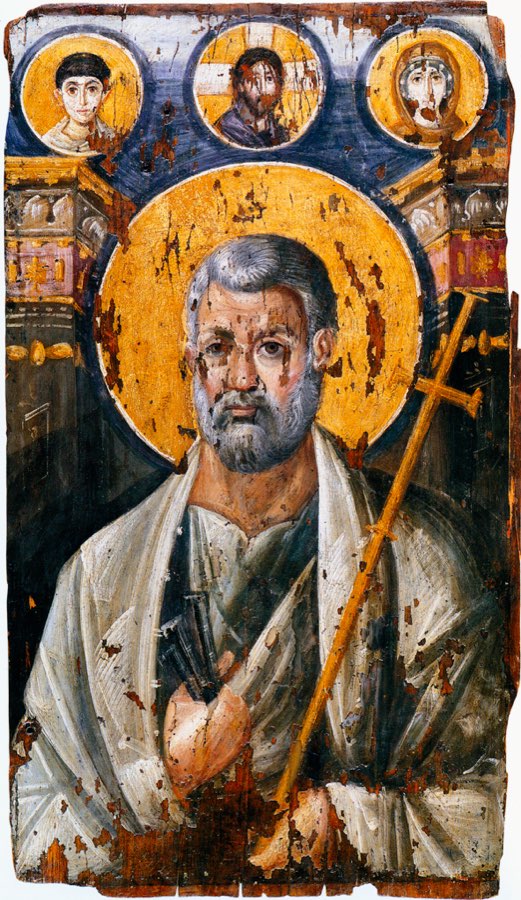
Simon, son of John, was a fisherman at Capernaum on the Sea of Galilee, working with his brother Andrew. Andrew brought him to Jesus, who looked at him and said, “Thou art Simon the son of Jona: thou shalt be called Cephas,” which means rock, or Peter (John 1).
The Gospels show him as the first among the Twelve: impulsive, generous and very human. He left his nets at a word, walked on the water and began to sink, and was with Jesus at the Transfiguration and in Gethsemane. At Caesarea Philippi he confessed, “Thou art Christ, the Son of the living God,” and Jesus answered, “Thou art Peter; and upon this rock I will build my church… And I will give to thee the keys of the kingdom of heaven” (Matthew 16). On the night of the Passion he denied his Master three times, and wept bitterly. After the Resurrection Jesus asked him three times, “Lovest thou me?” and three times told him, “Feed my sheep” (John 21).
At Pentecost Peter preached the first sermon of the Church, and three thousand were baptized (Acts 2). He healed the lame, was imprisoned and freed by an angel, received the first Gentile convert, Cornelius, and spoke decisively at the Council of Jerusalem. Two letters of the New Testament bear his name.
He went at last to Rome, and there, in the persecution under Nero, he was crucified, according to ancient tradition head downwards at his own request. He was buried on the Vatican Hill, where the basilica of Saint Peter now stands over his tomb. The Church keeps his feast together with Saint Paul’s on 29 June.