The Tilma of Guadalupe
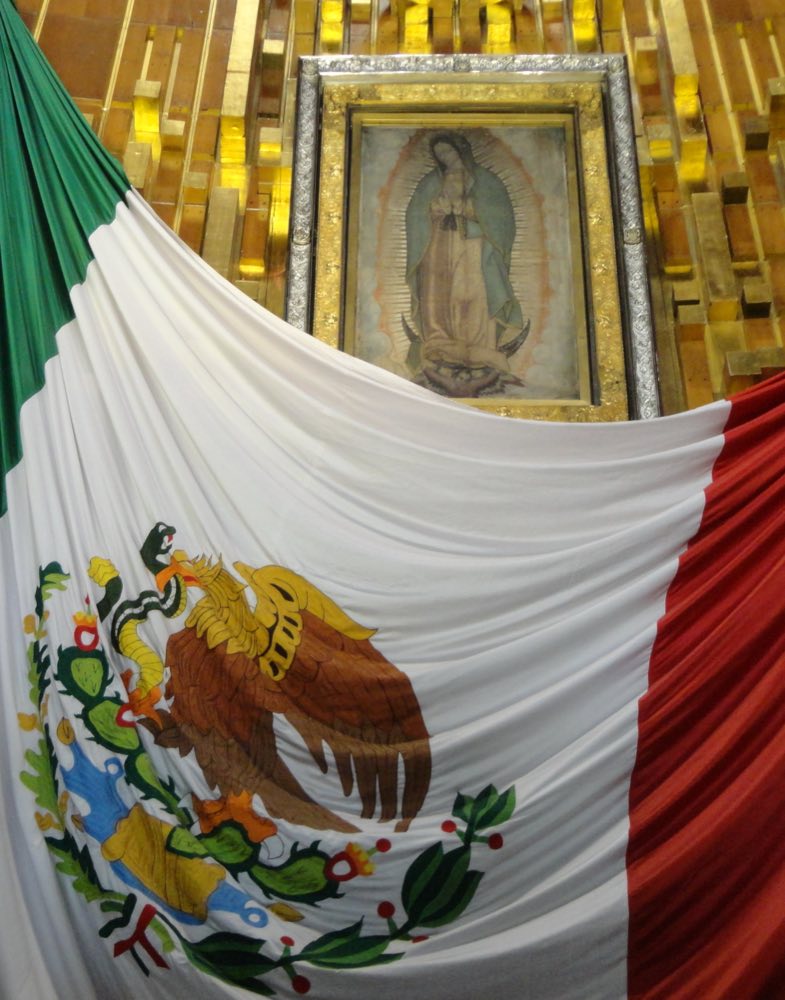
In December 1531, ten years after the Spanish conquest of Mexico, the Virgin Mary appeared four times to an Aztec convert named Juan Diego Cuauhtlatoatzin on the hill of Tepeyac, north of Mexico City. She asked for a church to be built there. The bishop, Juan de Zumárraga, asked for a sign. On 12 December Our Lady told Juan Diego to gather flowers on the barren hilltop, and he found Castilian roses blooming in winter. He carried them to the bishop in his tilma, his cloak woven of agave fibre. When he opened it, the roses fell to the floor, and on the cloth was the image of the Virgin, standing before the sun, dressed in a mantle of stars.
The image shows Our Lady as a young mestiza woman, her hands joined in prayer and her head bowed. In the symbolic language of the Aztecs she was the mother of the true God, and millions of the native peoples were baptized in the following years.
The coarse cloth should have decayed within decades, yet it has survived nearly five centuries. It survived even a bomb hidden in flowers at its altar in 1921, which bent a heavy brass crucifix but left the image untouched.
Juan Diego was canonized in 2002. The Basilica of Guadalupe is the most visited Marian shrine in the world, and her feast, 12 December, is kept throughout the Americas, of which she is patroness.
- Where
- Basilica of Our Lady of Guadalupe, Mexico City, Mexico
- When to see it
- On view every day above the high altar. A moving walkway passes beneath it so that pilgrims can pray before it.
- Map
- Find it on OpenStreetMap
- Read about
- The Blessed Virgin Mary